

The Evolution of Scheduling in Modern SaaS
From Static to Dynamic Scheduling
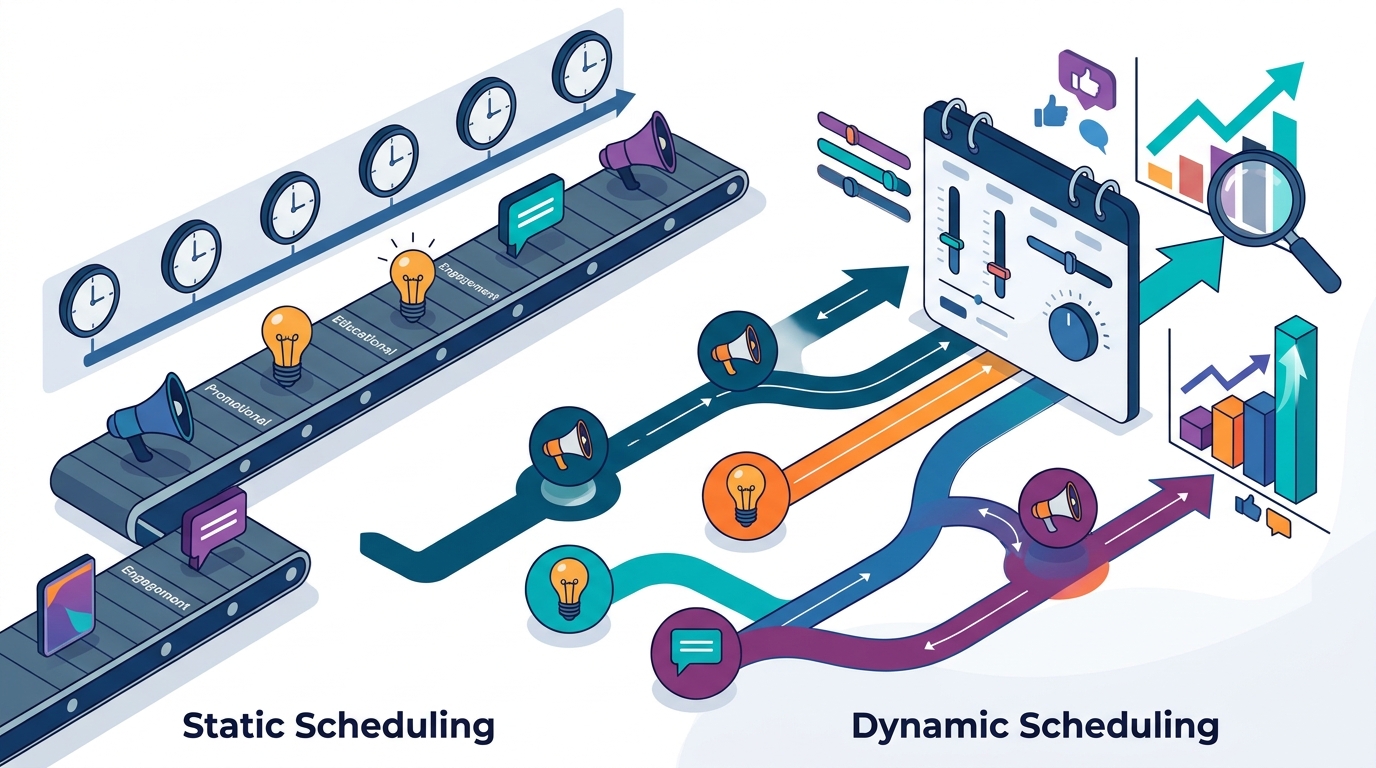
Static scheduling treats all content the same. Dynamic scheduling recognizes that a promotional post may perform differently on a Tuesday than an educational post. By allowing configuration by post category, teams can create distinct schedules for different content types. This ensures that high-value content is published at optimal times for its specific purpose. For additional details, review the Customer Experience.
Multi-Channel Publishing Capabilities
Platform-Specific Automation
Each social network has unique technical requirements and audience expectations. A robust scheduler must handle these differences seamlessly. The Auto Post engine in the LSE platform manages these complexities by applying specific rules to each channel. This reduces the manual overhead for marketing teams who need to maintain a consistent presence across diverse platforms. For additional details, review the Frequently Asked Questions.
AI-Driven Content and Translation
Localization at Scale
Per-Post Snapshot Analytics
Generic analytics often provide aggregate data that obscures individual post performance. Per-post snapshot analytics track views, reactions, comments, and shares over time for each individual post. This data allows customers to find their own best posting patterns. Instead of relying on generic guesses, teams can see exactly which posts performed well and why. This feedback loop is critical for optimizing future scheduling decisions. For additional details, review the About.
Identifying Winning Patterns
By analyzing per-post data, teams can identify specific patterns. For example, a team might find that their LinkedIn posts perform best on Wednesday mornings. This insight allows them to adjust their Auto Post schedules accordingly. Over time, this data-driven approach leads to more effective content distribution and higher engagement rates.
Positioning for Small and Mid-Sized Businesses
Cost-Effective Scaling
Key Takeaways
- AI content generation and translation with selectable engines accelerate content creation and localization.
- Per-post snapshot analytics enable teams to identify their own best posting patterns based on actual performance data.
- All plans are month-to-month with no annual commitment, providing flexibility for growing teams.
Frequently Asked Questions
What are the core buffer features in the LSE platform?
How many platforms does the LSE platform support?
Does the LSE platform offer AI content generation?
How does per-post snapshot analytics work?
Per-post snapshot analytics track views, reactions, comments, and shares over time for each individual post, allowing users to find their own best posting patterns.
Is there a free trial available?
Yes, a 15-day free trial of the Starter plan is available with no credit card required. Learn more: marketing lumanet info.