

How Automatic Posting to Multiple Social Platforms Works in Practice
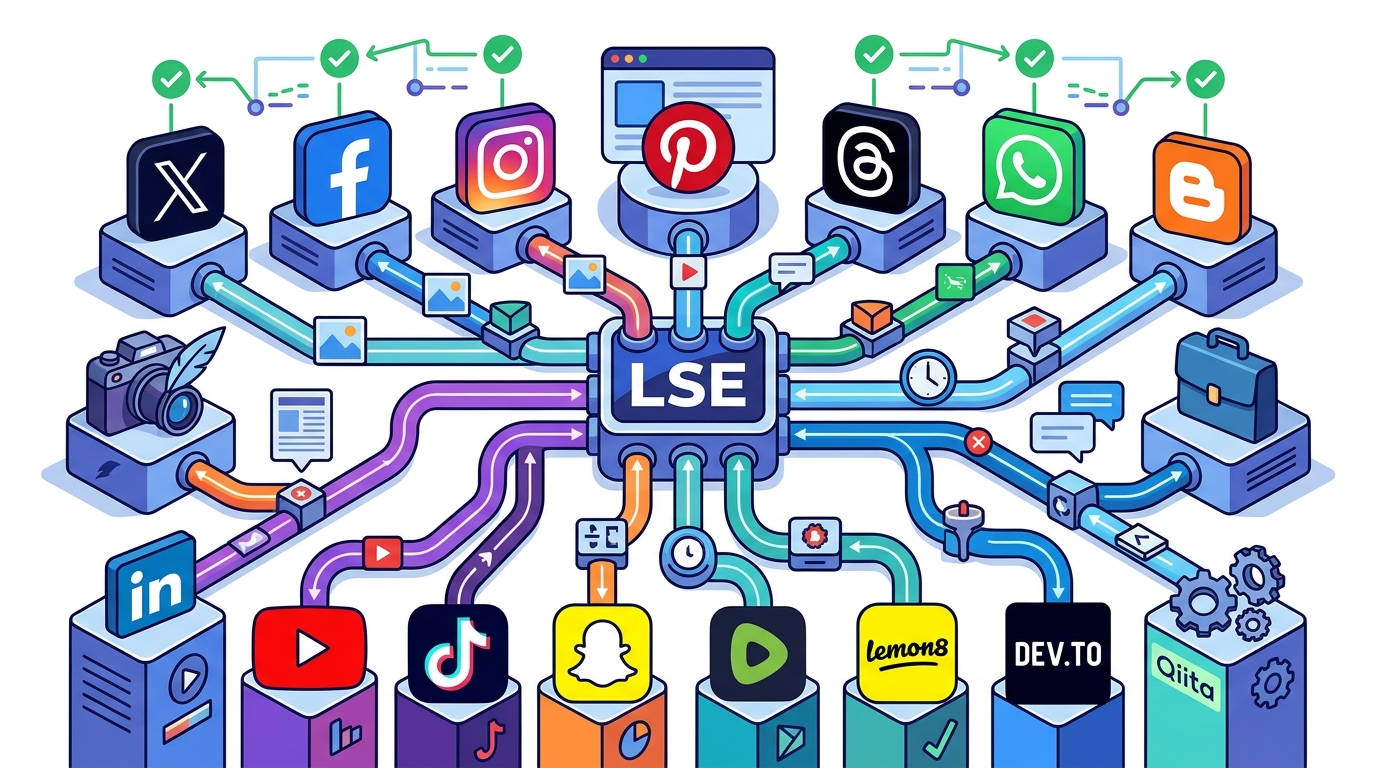
Automatic posting to multiple social platforms is a workflow where a central dashboard schedules and publishes content to various networks simultaneously. In practice, this relies on API integrations, per-channel formatting rules, and automated error handling. LSE Omni-Channel Marketing Platform manages this process by allowing teams to configure specific posting schedules and monitor real-time delivery status across all connected accounts. For additional details, review the marketing lumanet info.
The Mechanics of Multi-Channel API Integration
Each social network has unique technical requirements. For example, Instagram requires a specific image aspect ratio and a minimum character count for captions, while X allows for longer text but has different media upload limits. The platform must translate the user's single input into these distinct formats. LSE Omni-Channel Marketing Platform handles this translation automatically, ensuring that the content adheres to the technical specifications of each connected network before sending the request. For additional details, review the Customer Experience.
This integration layer is critical because it abstracts the complexity away from the marketing team. Without a robust API layer, marketers would have to manually log into each platform and adjust settings individually. The system acts as a bridge, validating the content against the network's rules and only publishing when the data is compliant. For additional details, review the Frequently Asked Questions.
Configuring Per-Channel Schedules and Categories
Once the technical connection is established, the next step is defining when and where content appears. A posting schedule is a predefined timeline that dictates the exact date and time a piece of content is published. In practice, effective auto-posting requires granular control over these schedules. This means setting different times for different days of the week or different content categories. For additional details, review the About.
For instance, a B2B company might want to post technical updates on LinkedIn on Tuesday mornings, but casual behind-the-scenes photos on Instagram on Friday afternoons. The LSE Omni-Channel Marketing Platform allows users to configure these schedules per channel and per day of the week. This level of detail ensures that content reaches the audience when they are most likely to be active on that specific platform, rather than using a one-size-fits-all approach.
This configuration phase is where the strategy meets the execution. By mapping content categories to specific channels and times, teams can maintain a consistent presence without the daily burden of manual publishing. The system remembers these rules and applies them to every new piece of content assigned to that category.
Handling Media and Format Adaptation
Text is only part of the equation; visual media is often the primary driver of engagement. Media adaptation is the process of resizing, cropping, or converting images and videos to meet the specific requirements of each social network. A single high-resolution image uploaded to the dashboard may need to be cropped into a square for Instagram, a wide banner for LinkedIn, and a vertical video for TikTok.
In practice, this adaptation happens automatically during the publishing process. The platform detects the media type and applies the necessary transformations. If a video is too long for a specific platform, the system may flag it or trim it according to the user's preferences. This prevents failed posts due to technical mismatches, which is a common issue when trying to publish the same file to multiple networks manually.
Monitoring Delivery and Error Resolution
Even with robust integrations, errors can occur. Network outages, API rate limits, or content policy violations can cause a post to fail. Error handling is the mechanism by which the system detects these failures and notifies the user. In practice, a reliable auto-posting tool provides real-time status updates for each scheduled post.
When a post fails, the system logs the specific error code returned by the social network's API. This allows the marketing team to diagnose the issue quickly. For example, if a post is rejected due to a sensitive word filter, the user can edit the caption and resubmit it. The LSE Omni-Channel Marketing Platform provides per-post snapshot analytics that track the status of each publication, ensuring that no content is lost or published at the wrong time.
This monitoring capability is essential for maintaining brand consistency. It transforms auto-posting from a blind fire-and-forget process into a managed workflow. Teams can trust that their content is being delivered as intended, and they have the tools to fix any issues that arise in real-time.
Key Takeaways
- API integration is the foundation of auto-posting, translating user input into network-specific data packets.
- Per-channel scheduling allows for strategic timing, matching content to audience activity on specific platforms.
- Media adaptation automatically resizes and formats visuals to meet the technical requirements of each network.
- Error handling and real-time status monitoring ensure that failed posts are identified and resolved quickly.
- Granular control over posting categories and days of the week enables a consistent and efficient publishing workflow.
Frequently Asked Questions
What is the role of an API in social media auto-posting?
An API allows the management platform to communicate with social networks, sending the necessary data to publish content automatically.
Can I set different posting times for different social networks?
Yes, most advanced platforms allow you to configure specific schedules for each channel, enabling you to post at optimal times for each audience.
How does the platform handle image resizing for different networks?
The system automatically crops and resizes images to match the aspect ratio and dimension requirements of each specific social platform.
What happens if a post fails to publish?
The system logs the error and notifies the user, allowing them to review the issue, make necessary edits, and resubmit the content.
Does auto-posting require manual intervention for every piece of content?
No, once the schedules and rules are configured, the system handles the publishing process automatically without daily manual input.
Conclusion
Understanding the mechanics of automatic posting reveals that it is a complex interplay of API integration, media adaptation, and schedule management. LSE Omni-Channel Marketing Platform simplifies this process by providing a unified dashboard where these technical details are handled automatically. By leveraging per-channel schedules and real-time monitoring, marketing teams can maintain a consistent presence across all major networks with minimal manual effort. To explore how this workflow can be implemented for your business, visit the LSE Omni-Channel Marketing Platform. Learn more: marketing lumanet info.