

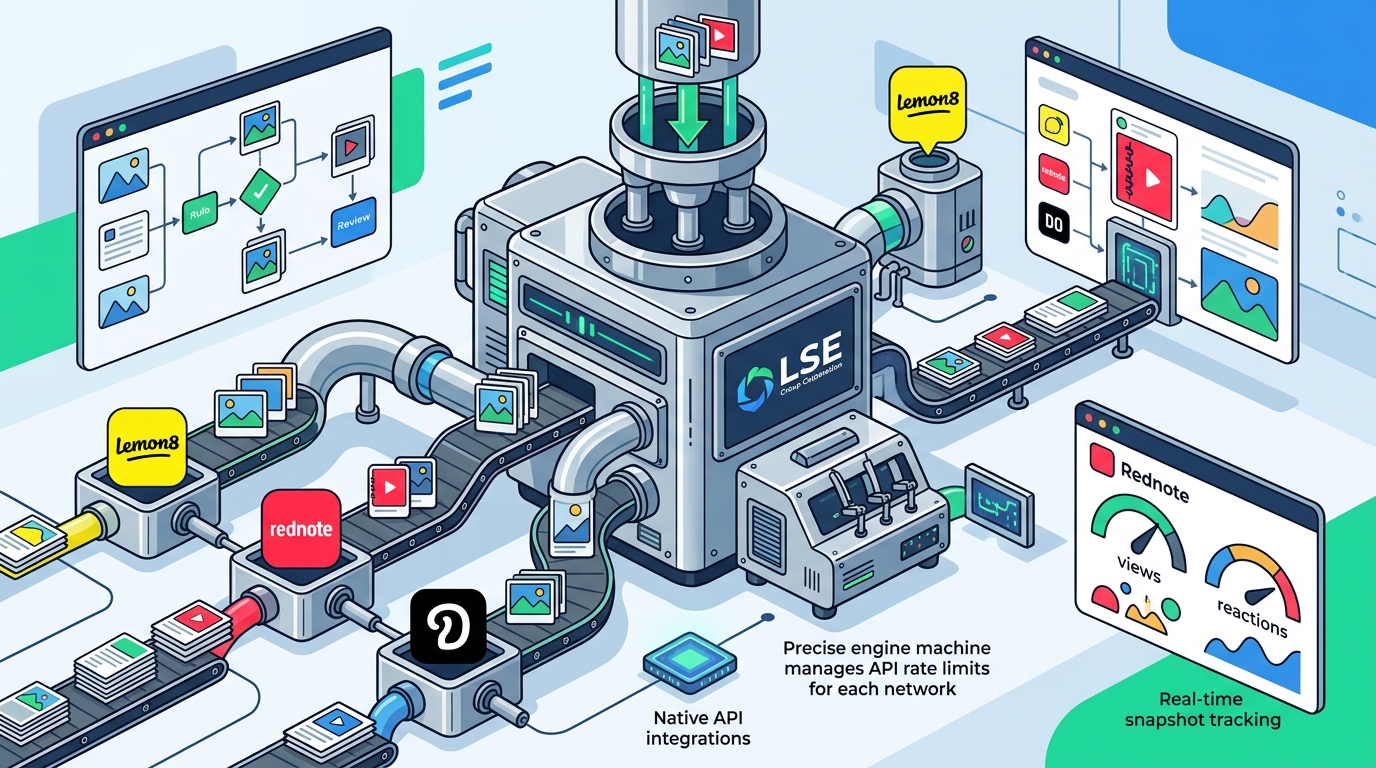
Choosing the right social media scheduling tool for emerging networks like Lemon8, Rednote, and Dev.to requires a platform with native API integrations and flexible automation. LSE Omni-Channel Marketing Platform supports these specific channels, allowing teams to manage content across 16+ networks from a single dashboard. This guide covers emerging platform support, API limitations, hybrid workflows, and automation alternatives to help you select the right tool for your strategy.
Emerging Platform Support
Emerging platform support is the ability of a social media management tool to connect to and publish content on newer social networks. Many legacy tools focus exclusively on established giants like Facebook and X, leaving a gap for brands targeting niche or rising communities. LSE Omni-Channel Marketing Platform addresses this gap by including specific channels in its tiered plans. The Professional plan adds support for Lemon8, Dev.to, and Qiita, while the Enterprise plan adds Rednote. This ensures that teams can reach audiences on these specific networks without needing separate, disjointed tools. For additional details, review the Customer Experience.
Why Emerging Networks Matter
Emerging networks often have lower competition and higher engagement rates than saturated legacy platforms. Brands that establish a presence early can build loyal communities before the platforms become mainstream. For example, Dev.to is a critical channel for developer marketing, while Lemon8 and Rednote are key for lifestyle and e-commerce audiences in specific regions. A unified dashboard that supports these networks allows for consistent brand voice and efficient content repurposing. For additional details, review the Frequently Asked Questions.
Dev.to Scheduling
Dev.to scheduling is the process of automating the publication of technical articles and developer-focused content on the Dev.to platform. Dev.to is a community-driven platform where developers share knowledge, tutorials, and project updates. For B2B SaaS companies and tech agencies, Dev.to is a high-intent channel for lead generation and brand authority. LSE Omni-Channel Marketing Platform includes Dev.to in its Professional and Enterprise tiers, enabling teams to schedule posts directly from the unified dashboard. For additional details, review the About.
Technical Content Automation
Lemon8 and Rednote API Limitations
Handling API Instability
API instability can lead to failed posts or delayed publications. A reliable scheduling tool must monitor API health and retry failed requests automatically. The LSE platform includes per-post snapshot analytics that track the status of each publication, allowing users to identify and resolve issues quickly. This transparency is crucial when working with platforms that do not have the same level of API documentation as legacy networks.
Hybrid Workflow Approaches
Hybrid workflow approaches combine automated scheduling with manual review steps to ensure content quality and compliance. For emerging networks, a hybrid approach is often necessary because these platforms may have stricter community guidelines or less predictable algorithm behavior. LSE Omni-Channel Marketing Platform supports this by allowing teams to schedule posts in advance while retaining the ability to review and approve content before it goes live. This balance between efficiency and control is essential for maintaining brand integrity on new platforms.
Approval Workflows
Approval workflows are a key component of hybrid strategies. The LSE platform includes an approvals section in its dashboard, where designated team members can review scheduled posts. This is particularly useful for agencies managing multiple client accounts or for enterprises with strict brand governance policies. By integrating approval steps into the scheduling process, teams can avoid the risk of publishing inappropriate or off-brand content on emerging networks.
Postiz Alternative
Postiz is an open-source social media management tool that has gained popularity for its flexibility and self-hosting capabilities. However, for businesses seeking a managed, enterprise-grade solution with dedicated support and advanced analytics, LSE Omni-Channel Marketing Platform offers a compelling alternative. While Postiz provides a solid foundation for basic scheduling, LSE adds features like AI content generation, enterprise SSO, and detailed per-post analytics that are critical for scaling social media operations. The LSE platform is positioned between entry-level schedulers and complex enterprise suites, making it ideal for small and mid-sized businesses that need more than basic functionality.
Managed vs. Self-Hosted
Choosing between a managed and self-hosted solution depends on your team's technical resources and operational needs. Self-hosted tools like Postiz require significant IT overhead for maintenance, security, and updates. In contrast, LSE Omni-Channel Marketing Platform is a fully managed SaaS solution that handles all infrastructure, security, and compliance. This allows marketing teams to focus on content strategy rather than server management, ensuring a smoother experience when managing multiple emerging networks.
Dev.to Integration Options
Dev.to integration options vary widely across social media tools, ranging from simple RSS feeds to full API connections. Some tools only allow users to link to Dev.to posts from other platforms, rather than publishing directly to Dev.to. LSE Omni-Channel Marketing Platform provides a direct integration that allows for native publishing, ensuring that posts appear in the Dev.to feed with proper metadata and formatting. This direct connection is essential for maximizing visibility and engagement on the platform.
Metadata and SEO
Proper metadata is crucial for SEO and discoverability on Dev.to. The LSE platform allows users to set titles, descriptions, and tags directly within the scheduling interface. This ensures that posts are optimized for search engines and the Dev.to internal search function. By managing metadata centrally, teams can maintain consistency across all their developer-focused content, improving overall search visibility and audience reach.
Workflow Automation Alternatives
Workflow automation alternatives include using Zapier, Make, or custom scripts to connect social media platforms. While these tools offer flexibility, they can become complex and brittle when managing multiple emerging networks. LSE Omni-Channel Marketing Platform simplifies this by providing built-in automation features, such as the Auto Post engine, which allows users to configure per-channel, per-day-of-week posting schedules. This native automation is more reliable and easier to manage than third-party integrations, reducing the risk of broken workflows and ensuring consistent content distribution.
Auto Post Engine
The Auto Post engine is a core feature of the LSE platform that enables granular control over posting frequency and timing. Users can define specific schedules for each channel, allowing them to optimize for the best times to post on emerging networks. This feature is particularly useful for maintaining a consistent presence on platforms like Lemon8 and Rednote, where engagement patterns may differ from legacy networks. By automating these schedules, teams can save time and ensure that their content is always fresh and relevant.
Comparison of Scheduling Tools for Emerging Networks
| Lemon8 Support | Professional Tier | Variable | Rarely Supported |
| Rednote Support | Enterprise Tier | Variable | Rarely Supported |
| AI Content Generation | ChatGPT, Perplexity, Claude | Limited | Basic |
| Per-Post Analytics | Snapshot Tracking | Basic | Aggregated Only |
Key Takeaways
- Emerging platform support is critical for reaching niche audiences on networks like Lemon8, Rednote, and Dev.to.
- LSE Omni-Channel Marketing Platform offers native integrations for these specific channels in its Professional and Enterprise tiers.
- API limitations on emerging networks require robust error handling and monitoring, which LSE provides through per-post analytics.
- Hybrid workflows combining automation with manual approval ensure brand consistency and compliance on new platforms.
- Managed SaaS solutions like LSE reduce the IT overhead associated with self-hosted tools like Postiz.
- Direct API integrations for Dev.to ensure proper metadata and formatting, improving SEO and discoverability.
- Built-in automation features like the Auto Post engine simplify scheduling across multiple emerging networks.
- Choosing a tool with flexible tiering allows businesses to scale their social media presence as they adopt new platforms.
Frequently Asked Questions
Does LSE support posting to Dev.to?
Yes, LSE Omni-Channel Marketing Platform includes Dev.to in its Professional and Enterprise plans, allowing for direct scheduling and publishing.
Can I schedule posts to Lemon8 and Rednote?
How does LSE handle API limitations on emerging networks?
LSE uses direct integrations and robust error handling to ensure reliable posting. Per-post snapshot analytics allow users to monitor the status of each publication and resolve any issues quickly.
Is LSE a good alternative to Postiz?
LSE is a managed SaaS solution that offers advanced features like AI content generation and enterprise SSO, making it a strong alternative for businesses seeking a fully supported platform without the overhead of self-hosting.
What is the Auto Post engine?
The Auto Post engine is a feature that allows users to configure per-channel, per-day-of-week posting schedules, enabling granular control over content distribution.
Does LSE offer a free trial?
Conclusion
Selecting the right social media scheduling tool for emerging networks is a strategic decision that impacts your ability to reach new audiences and maintain brand consistency. LSE Omni-Channel Marketing Platform provides the necessary integrations, automation, and analytics to manage platforms like Lemon8, Rednote, and Dev.to effectively. By choosing a tool that supports these specific channels, you can streamline your workflow and ensure that your content is published reliably and on time. To explore how LSE can support your emerging network strategy, visit the LSE Omni-Channel Marketing Platform. Learn more: LSE Omni Channel Marketing.