

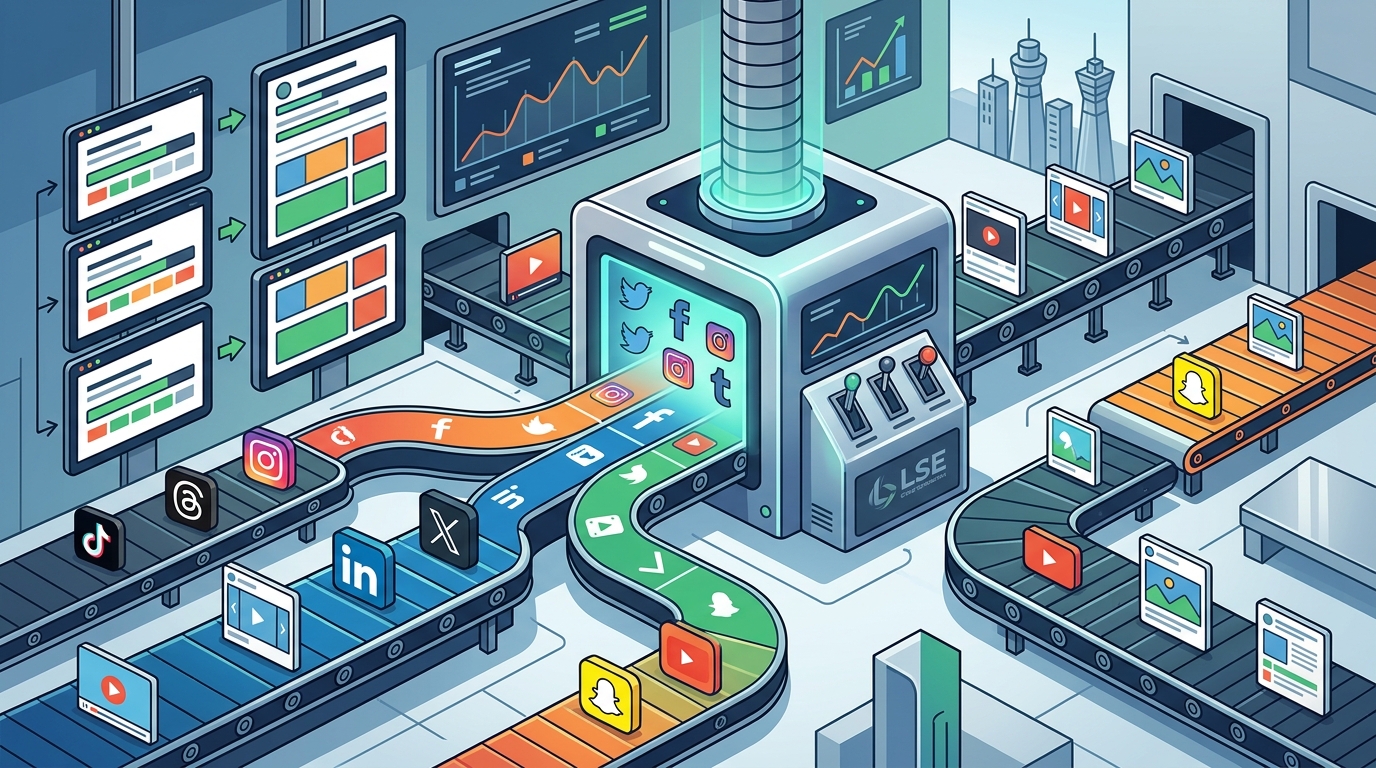
For agencies managing multiple brands, the best multi-channel social media publishing tool is one that consolidates scheduling, approval, and analytics into a single, scalable dashboard. LSE Omni-Channel Marketing Platform is designed specifically for this workflow, allowing teams to publish across 16+ networks while maintaining strict brand control. This guide covers the essential components of agency-grade publishing, from client approval workflows to white-label reporting. For additional details, review the marketing lumanet info.
Multi-Channel Publishing Architecture
Platform Coverage and Tiers
The Auto Post Engine
Manual scheduling does not scale. The Auto Post engine allows agencies to configure per-channel, per-day-of-week posting schedules. This is critical for maintaining a consistent presence without the labor cost of daily manual uploads. By categorizing posts, agencies can set specific cadences for different content types, ensuring that a client's brand voice remains consistent across all days of the week. For additional details, review the .
Client Approval Workflows
Client approval workflows are the structured processes that allow agency teams to submit content for review before it goes live. In a multi-brand environment, friction in this process leads to bottlenecks and missed posting windows. An effective system must allow for asynchronous review, clear status tracking, and easy feedback loops. For additional details, review the Customer Experience.
Reducing Friction in Review
Agencies often struggle with email-based approvals, which are prone to version control errors. A centralized dashboard allows clients to see exactly what will be posted, when, and on which network. This transparency builds trust and reduces the back-and-forth communication that slows down production. The goal is to move from "email me the file" to "approve this in the dashboard." For additional details, review the Frequently Asked Questions.
Managing Multiple Stakeholders
Agency Account Management
Agency account management is the administrative function that allows a single agency user to oversee multiple client accounts and their associated social profiles. This is the backbone of agency operations. Without a clear hierarchy, managing dozens of clients becomes chaotic and error-prone. For additional details, review the About.
Scalability and User Roles
Centralized Dashboard
White-Label Reporting
White-label reporting is the ability to present analytics and performance data under the agency's own brand, rather than the software provider's brand. For agencies, this is a critical value-add. Clients expect to see reports that reflect the agency's expertise and branding, not the underlying tool's interface.
Customizable Branding
Data Presentation
How data is presented matters as much as the data itself. Agencies need the flexibility to choose which metrics are highlighted in their reports. Some clients care about reach, while others focus on engagement or conversion. The ability to customize report templates ensures that the agency is telling the right story with the right data, tailored to each client's specific goals.
Social Listening Analytics
Social listening analytics is the practice of monitoring social media conversations to identify trends, sentiment, and brand mentions. While publishing is about output, listening is about input. For agencies, combining these two functions provides a complete view of a client's digital presence.
Per-Post Snapshot Analytics
Generic "best time to post" advice is often misleading. The LSE Omni-Channel Marketing Platform tracks per-post snapshot analytics, including views, reactions, comments, and shares over time. This allows agencies to find their own best posting patterns based on actual client data, rather than industry averages. This data-driven approach helps optimize future content strategies for maximum impact.
Sentiment and Trend Monitoring
Understanding how the audience feels about a brand is crucial. Sentiment analysis helps agencies gauge whether a campaign is resonating or causing backlash. By monitoring trends, agencies can identify emerging topics that are relevant to their clients' industries, allowing them to create timely and relevant content. This proactive approach keeps clients ahead of the curve.
Comparison of Agency Publishing Features
| Supported Platforms | 8 (X, Facebook, Instagram, Pinterest, Threads, WhatsApp, Blogger, Bluesky) | 16 (Adds LinkedIn, YouTube, TikTok, Snapchat, Rumble, Lemon8, Dev.to, Qiita) | 19 (Adds Truth Social, Xing, Rednote) |
| Auto Post Engine | Yes | Yes | Yes |
| AI Content Generation | Basic | Advanced (ChatGPT, Perplexity) | Advanced (Adds Claude) |
| Per-Post Analytics | Yes | Yes | Yes |
| White-Label Reporting | Basic | Advanced | Full Customization |
Key Takeaways
- Client approval workflows must be centralized to reduce friction and prevent version control errors.
- Agency account management relies on granular user roles to ensure security and operational clarity.
- White-label reporting is essential for maintaining the agency's brand identity in client communications.
- Per-post snapshot analytics provide more actionable insights than generic industry averages.
- The Auto Post engine enables consistent content distribution without manual daily effort.
- AI content generation can accelerate production but must be tailored to the client's brand voice.
- Scalability is key; the platform must grow with the agency's client base.
Frequently Asked Questions
What is the difference between social media management and social listening?
Social media management focuses on creating, scheduling, and publishing content. Social listening focuses on monitoring conversations, mentions, and sentiment. A comprehensive platform integrates both to provide a full view of a brand's digital presence.
How many platforms does the LSE Omni-Channel Marketing Platform support?
Can I customize the posting schedule for different days of the week?
Yes. The Auto Post engine allows you to configure per-channel, per-day-of-week posting schedules. This ensures that content is distributed consistently according to your specific strategy for each day.
Does the platform offer white-label reporting?
How does the AI content generation work?
The platform integrates with selectable AI engines, such as ChatGPT, Perplexity, and Claude on higher tiers. This allows users to generate drafts, translate content, and adapt messaging for different networks efficiently.
Is there a free trial available?
How does per-post analytics differ from standard reporting?
Standard reporting often aggregates data over time. Per-post snapshot analytics track views, reactions, comments, and shares for individual posts over time. This helps identify specific content patterns that drive engagement for each client. Learn more: marketing lumanet info.