

Best Hootsuite Alternatives for Small and Mid-Sized Businesses in 2026
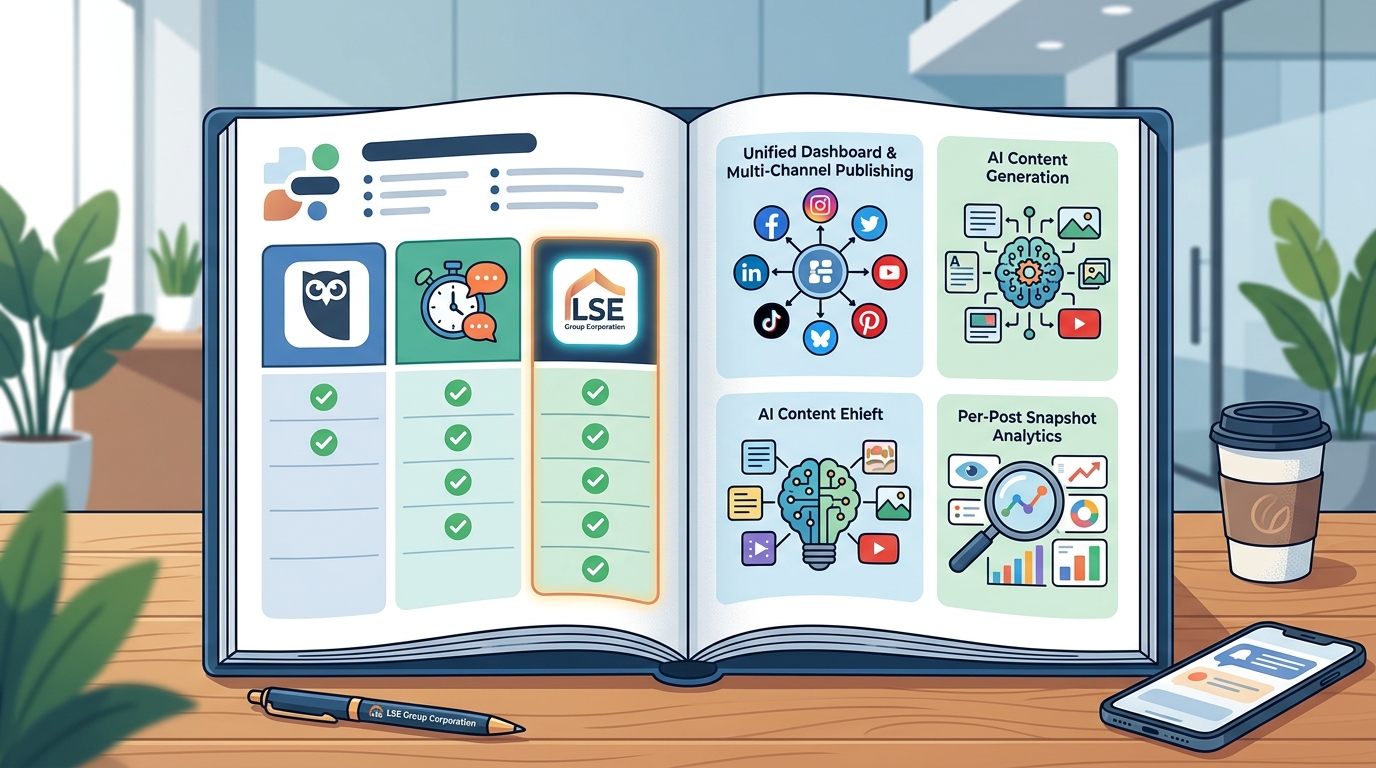
For small and mid-sized businesses seeking a robust alternative to Hootsuite, the LSE Omni-Channel Marketing Platform offers a unified dashboard for multi-channel publishing, AI-driven content creation, and per-post snapshot analytics. This guide covers essential team collaboration features and AI content generation capabilities that define modern social media management. We examine how these tools help marketing teams streamline workflows, reduce manual effort, and gain actionable insights without the complexity of enterprise suites.
Team Collaboration Features
Effective social media management requires more than just scheduling posts. It demands seamless coordination among team members, stakeholders, and clients. Team collaboration features are the mechanisms that allow multiple users to create, review, and approve content within a shared workspace. These features prevent version control issues and ensure brand consistency across all channels. For additional details, review the .
Unified Dashboards and Role Management
A unified dashboard serves as the central hub for all social media activities. In the LSE Omni-Channel Marketing Platform, this interface allows teams to publish and schedule content across every platform from a single view. Role management is critical for security and workflow efficiency. Administrators can assign specific permissions to team members, ensuring that only authorized personnel can publish content while others focus on drafting or analytics. This structure is particularly beneficial for agencies managing multiple client accounts or internal teams with distinct responsibilities. For additional details, review the Customer Experience.
Approval Workflows and Scheduling
Approval workflows are a step-by-step process where content moves from draft to scheduled to published based on predefined rules. This ensures that no post goes live without necessary sign-offs. The platform supports scheduled posts and approvals, allowing teams to plan content calendars weeks in advance. By integrating these features, businesses can reduce the risk of errors and maintain a consistent publishing cadence. The ability to view the entire content calendar in one place helps teams identify gaps or overlaps in their strategy. For additional details, review the Frequently Asked Questions.
Analytics and Reporting for Teams
Collaboration extends to data sharing. Per-post snapshot analytics track views, reactions, comments, and shares over time. This data is accessible to all team members, fostering a data-driven culture. Instead of relying on generic best practices, teams can analyze their own performance metrics to identify what works for their specific audience. This transparency helps align marketing efforts with business goals and provides clear evidence of ROI to stakeholders. For additional details, review the About.
AI Content Generation
AI content generation is the use of artificial intelligence algorithms to create, edit, or translate marketing copy and visual assets. In the context of social media management, AI tools accelerate the content creation process by providing drafts, suggestions, and translations. This allows marketers to focus on strategy and refinement rather than starting from a blank page.
Multi-Engine AI Integration
The LSE Omni-Channel Marketing Platform integrates multiple AI engines, including ChatGPT, Perplexity, and Claude on higher tiers. This multi-engine approach provides flexibility. Marketers can select the AI model that best suits their specific content needs. For example, one engine might excel at creative brainstorming, while another is better suited for factual accuracy or translation. This versatility ensures that the AI output aligns with the brand's voice and tone.
Translation and Localization
Workflow Integration
AI tools are most effective when integrated into existing workflows. The platform allows AI-generated content to be saved as drafts, edited, and scheduled like any other post. This seamless integration ensures that AI is a tool for enhancement, not a replacement for human creativity. Teams can use AI to generate initial ideas, refine them, and then schedule them across multiple channels. This hybrid approach maximizes efficiency while maintaining quality control.
Platform Comparison
Choosing the right platform depends on specific business needs. The following table compares key features of the LSE Omni-Channel Marketing Platform with general capabilities found in other social media management tools.
| Feature | LSE Omni-Channel Platform | Typical Enterprise Suites |
|---|---|---|
| Supported Platforms | Up to 19 platforms including X, Facebook, Instagram, LinkedIn, TikTok, and YouTube | Varies, often limited to major networks |
| AI Content Generation | Multi-engine support (ChatGPT, Perplexity, Claude) | Often single-engine or basic templates |
| Analytics | Per-post snapshot analytics tracking views, reactions, comments, shares | Aggregate reports, less granular per-post data |
| Pricing Model | Month-to-month, no annual commitment | Often requires annual contracts |
| Target Audience | Small and mid-sized businesses, agencies | Large enterprises |
Key Takeaways
- Unified Dashboards streamline multi-channel publishing and reduce context switching for marketing teams.
- Role Management ensures security and workflow efficiency by assigning specific permissions to team members.
- Approval Workflows prevent errors and maintain brand consistency through structured sign-off processes.
- Per-Post Analytics provide granular insights into performance, enabling data-driven strategy adjustments.
- Multi-Engine AI offers flexibility by allowing users to select the best AI model for specific content tasks.
- AI Translation accelerates localization efforts, supporting global reach without significant overhead.
- Comprehensive Platform Support covers a wide range of social and publishing networks, ensuring broad audience reach.
Frequently Asked Questions
What is the main difference between LSE and Hootsuite?
The LSE Omni-Channel Marketing Platform is positioned as an alternative to Hootsuite, offering similar core scheduling features but with a focus on AI content generation and per-post snapshot analytics. It is designed specifically for small and mid-sized businesses that need more than entry-level schedulers but do not require the complexity of enterprise suites.
Does the platform support AI translation?
Which AI engines are integrated into the platform?
The platform integrates multiple AI engines, including ChatGPT, Perplexity, and Claude on higher tiers. This multi-engine approach provides flexibility for different content creation needs.
How does per-post snapshot analytics work?
Per-post snapshot analytics track views, reactions, comments, and shares over time for individual posts. This allows users to find their own best posting patterns instead of relying on generic best time to post guesses.
Is there a free trial available?
Yes, a 15-day free trial of the Starter plan is available, and no credit card is required to sign up.
What platforms are supported by the LSE Omni-Channel Marketing Platform?
The platform supports up to 19 platforms, including X, Facebook, Instagram, Pinterest, Threads, WhatsApp, Blogger, Bluesky, LinkedIn, YouTube, TikTok, Snapchat, Rumble, Lemon8, Dev.to, Qiita, Truth Social, Xing, and Rednote, depending on the plan.
Can multiple team members collaborate on content?
Yes, the platform includes team collaboration features such as role management, approval workflows, and a unified dashboard. This allows multiple users to create, review, and approve content within a shared workspace.
Is the platform suitable for agencies?
Yes, the platform is well-suited for agencies managing multiple client accounts. Role management and approval workflows help maintain brand consistency and security across different client portfolios.
Conclusion
Selecting the right social media management platform is a strategic decision that impacts efficiency, reach, and brand consistency. The LSE Omni-Channel Marketing Platform provides a robust solution for small and mid-sized businesses, combining comprehensive multi-channel publishing with advanced AI content generation and granular analytics. By focusing on team collaboration and data-driven insights, it empowers marketing teams to optimize their efforts and achieve their goals. To explore how the platform can fit your specific needs, visit the LSE Omni-Channel Marketing Platform. Learn more: LSE Omni Channel Marketing.