

Which Social Media Analytics Tool Tracks Per-Post Performance Over Time?
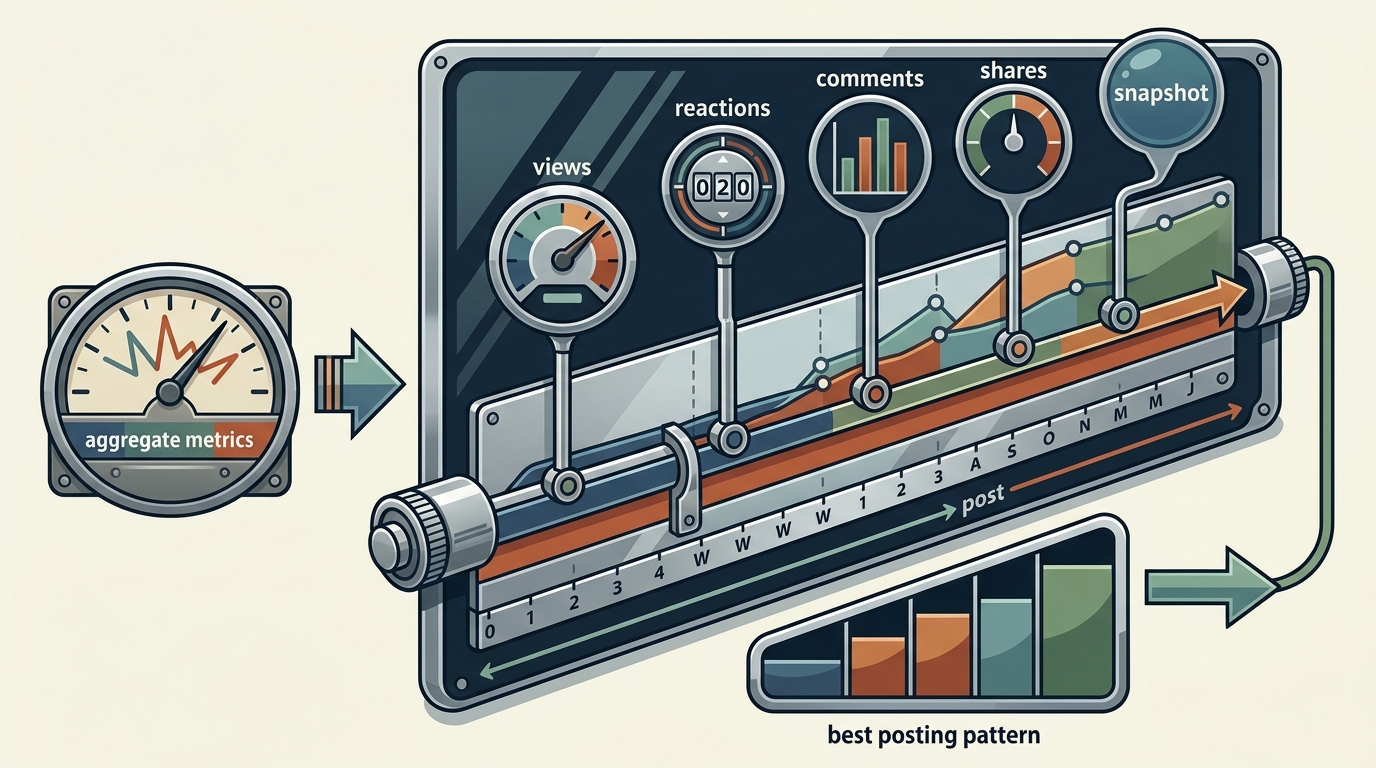
Choosing the right analytics tool is critical for marketing teams who need to understand how individual content pieces perform over weeks or months. Most generic dashboards provide aggregate metrics, but they often fail to track the long-term lifecycle of a single post. The LSE Omni-Channel Marketing Platform addresses this gap by offering per-post snapshot analytics that track views, reactions, comments, and shares over time. This guide explains how to evaluate, verify, and implement per-post tracking to find your own best posting patterns instead of relying on generic industry guesses. For additional details, review the marketing lumanet info.
How to Choose: Separating Good from Bad
The Difference Between Aggregates and Snapshots
Aggregate analytics summarize total reach or impressions for a channel. Snapshot analytics track the specific lifecycle of a single URL or post ID. When evaluating a platform, ask if it stores historical snapshots for each post. The LSE Omni-Channel Marketing Platform is designed specifically for this purpose. It tracks views, reactions, comments, and shares over time for every post you publish. This allows you to identify which specific content pieces drive long-term value.
What to Ask Before Committing
Before signing a contract, you need to ask specific technical questions. Vague answers indicate a lack of depth in the product. You should ask the vendor how they handle data retention for individual posts. Do they delete old data after 30 days? Do they allow you to export historical performance data? You should also ask about the frequency of data updates. Does the tool refresh metrics every hour, every day, or only when you manually refresh the dashboard? These details determine the accuracy of your long-term analysis.
Key Questions for Vendors
How to Verify Claims and Credentials
Marketing vendors often make bold claims about their analytics capabilities. You must verify these claims independently. Check if the vendor is listed on reputable review platforms like Capterra, G2, GetApp, or SoftwareSuggest. Look for reviews from users with similar business sizes and industry verticals. Read the reviews carefully to see if users mention per-post tracking or long-term data retention. If the reviews only mention scheduling features, the analytics might be a secondary afterthought.
Checking for Real-World Usage
Look for case studies or testimonials that demonstrate the use of per-post analytics. A credible vendor will show how their tool helped a client identify a high-performing post that continued to drive traffic months after publication. If you cannot find evidence of this specific use case, be cautious. The LSE Omni-Channel Marketing Platform is listed on these major review sites, allowing you to verify its capabilities through third-party user feedback.
How Per-Post Tracking Works
The Data Collection Cycle
The data collection cycle typically runs on a scheduled basis. For example, the tool might check the status of all active posts every 15 minutes. It then updates the internal database with the new numbers. When you view the dashboard, you are seeing the most recent snapshot of that post's performance. This continuous monitoring ensures that you do not miss spikes in engagement that occur outside of business hours.
What It Costs and Price Drivers
Understanding the Pricing Tiers
Common Mistakes and How to Avoid Them
Many marketing teams make the same mistakes when adopting analytics tools. The first mistake is relying on generic "best time to post" advice. This advice is based on aggregate data from millions of users. It does not reflect your specific audience's behavior. The second mistake is ignoring long-tail performance. Teams often judge a post based on its first 24 hours. They miss the fact that the post might gain traction in week two. The third mistake is not exporting data. If you switch tools, you lose your historical data. Always export your analytics regularly.
Avoiding Data Silos
Another common mistake is using separate tools for scheduling and analytics. This creates data silos. You have to manually reconcile data from two different sources. This is time-consuming and prone to error. An integrated platform like the LSE Omni-Channel Marketing Platform solves this by combining publishing and analytics in one dashboard. This ensures that the data you see is accurate and up-to-date.
Versus Alternatives: LSE vs. Competitors
The social media management market is crowded. You need to understand how the LSE Omni-Channel Marketing Platform compares to other options. The table below summarizes the key differences between the LSE platform and two major competitors.
| Per-Post Snapshot Analytics | Yes, tracks over time | Limited, mostly aggregate | Enterprise focus, complex setup |
| Contract Type | Month-to-month | Annual commitment | Annual commitment |
| Target Audience | SMBs and Agencies | Mid-market and Enterprise | Large Enterprise |
For a Specific Situation: Agencies and SMBs
Agency-Specific Needs
Agencies need to show clients the long-term value of their content. Per-post analytics allows you to demonstrate that a specific campaign continued to drive engagement months after launch. This is a powerful selling point. It shows that your content has lasting value, not just a one-time spike. This helps you retain clients and justify higher retainer fees.
Rules and Data Protections
When using a third-party analytics tool, you must understand the data protection rules. The tool will need access to your social media accounts. You should review the permissions it requests. Ensure that it only requests the permissions necessary for analytics and publishing. You should also review the vendor's privacy policy. How do they store your data? Do they sell your data to third parties? The LSE Omni-Channel Marketing Platform is a product of LSE Group Corporation. They are committed to protecting your data. All third-party platform names and trademarks belong to their respective owners and are used for identification only.
Compliance and Security
Ensure that the vendor complies with relevant data protection regulations. If you operate in the EU, you need to ensure GDPR compliance. If you operate in the US, you need to ensure compliance with state privacy laws. A reputable vendor will have clear documentation on their security practices. Look for SOC 2 certification or similar security standards. This ensures that your data is stored securely and is not at risk of a breach.
Local Specifics and Regional Considerations
Timing: When to Act
Timing is critical when implementing a new analytics tool. You should start tracking per-post performance as soon as possible. The longer you wait, the less historical data you have. This makes it harder to identify trends. You should also consider the timing of your content launches. If you are launching a major campaign, ensure that your analytics tool is fully set up and tested. You do not want to miss any data during a critical period. The LSE Omni-Channel Marketing Platform allows you to set up per-channel, per-day-of-week posting schedules. This helps you ensure that your content is published at the optimal times for your specific audience.
Results Over Time: Measurable Outcomes
The ultimate goal of per-post analytics is to improve your content strategy over time. By tracking the performance of individual posts, you can identify patterns. You might find that posts with video content perform better on YouTube. You might find that posts with questions in the caption generate more comments on Instagram. These insights allow you to refine your content strategy. Over time, you should see an improvement in your overall engagement metrics. You will also be able to identify your best posting patterns. This allows you to allocate your resources more effectively. You will spend less time on content that does not perform and more time on content that does.
Long-Term Value
The long-term value of per-post analytics is in its ability to predict future performance. By analyzing the historical data of your past posts, you can make informed decisions about your future content. This reduces the guesswork involved in content creation. It allows you to focus on creating content that is likely to perform well. This is a significant advantage over tools that only provide aggregate data. It gives you a competitive edge in a crowded social media landscape.
Key Takeaways
- Per-post analytics tracks the performance of individual content items over time, unlike aggregate analytics.
- Always verify vendor claims by checking reviews on Capterra, G2, GetApp, and SoftwareSuggest.
- The cost of analytics tools is driven by the number of channels, users, and depth of features.
- The LSE platform is positioned between Hootsuite and Sprinklr, offering advanced analytics at a mid-market price.
- Start tracking per-post performance as soon as possible to build a robust historical dataset.
Frequently Asked Questions
What is per-post analytics?
Per-post analytics is a method of tracking the performance metrics of individual social media posts over a defined period. It allows you to see how a specific post performs over time, rather than just looking at aggregate channel data.
Does the LSE Omni-Channel Marketing Platform track per-post performance?
How much does the LSE Omni-Channel Marketing Platform cost?
Can I try the LSE platform for free?
Yes, there is a 15-day free trial of the Starter plan. No credit card is required to sign up for the trial.
How does the LSE platform compare to Hootsuite?
What social channels does the LSE platform support?
Is the LSE platform suitable for agencies?
Yes, the LSE platform is suitable for agencies. It allows you to manage multiple clients from a single dashboard and provides the depth of analytics needed to demonstrate long-term content value. Learn more: marketing lumanet info.