

Multi-Channel Publishing
Platform Coverage and Tiers
The Auto Post Engine
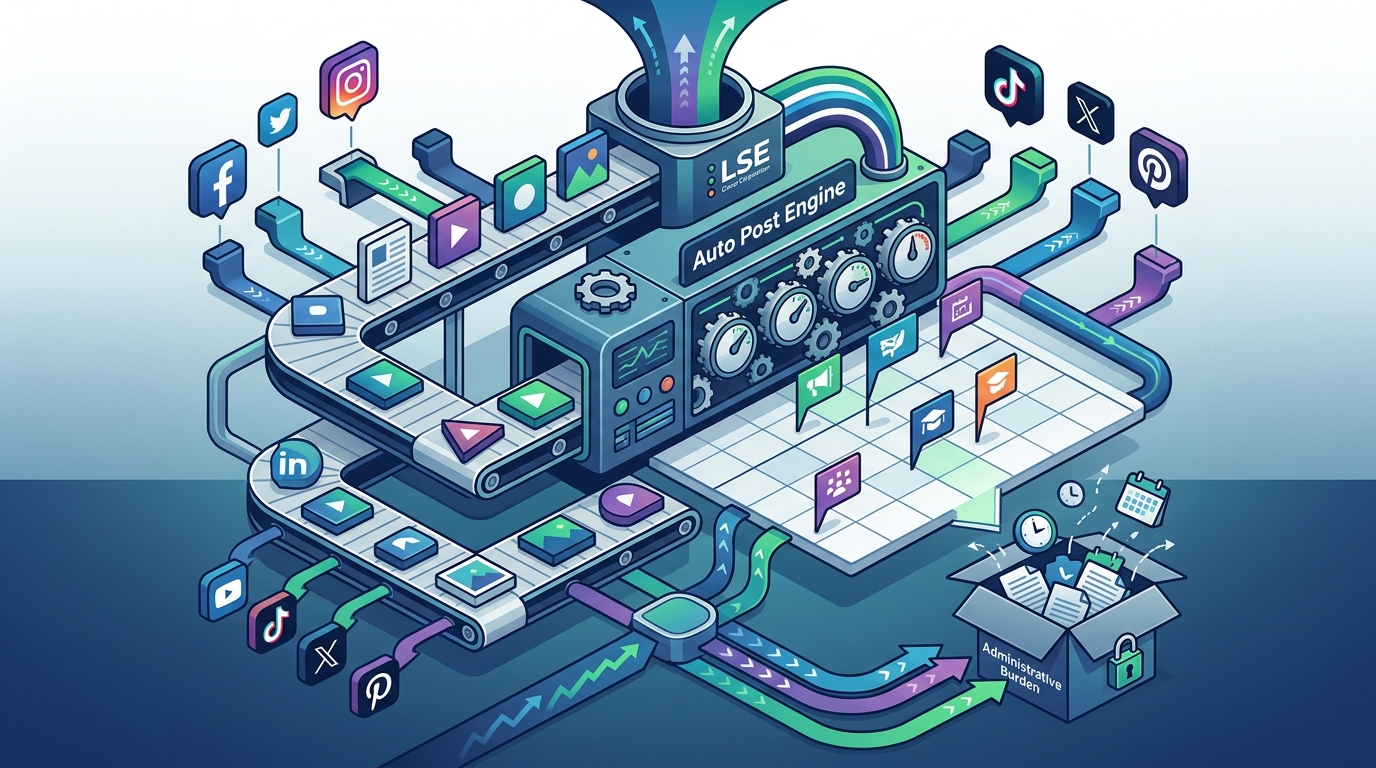
Efficiency is critical when managing dozens of brands. The Auto Post engine allows agencies to configure per-channel, per-day-of-week posting schedules. These schedules can be customized by post category, ensuring that promotional content, educational posts, and community engagement pieces appear at optimal times without manual intervention. This automation reduces the administrative burden on social media managers significantly. For additional details, review the marketing lumanet info.
White Label Reporting
White label reporting is the practice of presenting analytics and performance data under the agency's own brand identity rather than the software provider's. This is essential for maintaining client trust and professional appearance. Agencies using LSE Omni-Channel Marketing Platform can generate reports that reflect their own branding, reinforcing their value as strategic partners rather than just tool operators. For additional details, review the .
Per-Post Snapshot Analytics
Generic "best time to post" advice is often inaccurate for specific brand audiences. LSE Omni-Channel Marketing Platform tracks views, reactions, comments, and shares over time for every individual post. This per-post snapshot analytics capability allows agencies to identify unique posting patterns for each client. By analyzing historical data, teams can refine their strategies based on actual performance rather than industry averages. For additional details, review the Customer Experience.
Client-Facing Dashboards
Client Approval Workflows
Client approval workflows are structured processes that ensure content meets brand guidelines and receives sign-off before publication. For agencies, this minimizes the risk of publishing inappropriate or off-brand content. LSE Omni-Channel Marketing Platform integrates these workflows into the publishing pipeline, allowing for seamless review and approval cycles. For additional details, review the Frequently Asked Questions.
Streamlined Review Cycles
Traditional email-based approvals are slow and prone to errors. Digital workflows within the platform allow clients to review scheduled content directly. They can approve, reject, or request changes with a few clicks. This reduces back-and-forth communication and accelerates the time from creation to publication. Agencies can set up specific approval chains for different client brands, ensuring the right stakeholders review the right content. For additional details, review the About.
Brand Safety and Compliance
Team Collaboration
Team collaboration is the ability for multiple users to work on content creation, scheduling, and analysis within a shared environment. Agencies often have teams of social media managers, copywriters, and designers working on different client accounts. LSE Omni-Channel Marketing Platform facilitates this collaboration by providing a centralized workspace where all team members can contribute.
Role-Based Access and Permissions
Effective collaboration requires clear roles and permissions. The platform allows agencies to assign specific roles to team members, controlling who can create, edit, approve, or publish content. This ensures that junior staff can draft content while senior managers or clients handle final approvals. Role-based access also enhances security by limiting sensitive actions to authorized personnel.
AI-Assisted Content Generation
Key Takeaways
- Multi-channel publishing consolidates content distribution across up to 19 networks, reducing manual login tasks.
- The Auto Post engine enables automated, category-specific scheduling for each channel and day of the week.
- White label reporting allows agencies to present analytics under their own brand, enhancing client perception.
- Per-post snapshot analytics track views, reactions, comments, and shares to identify unique brand patterns.
- Client approval workflows integrate digital sign-off into the publishing pipeline, ensuring brand safety.
- AI content generation and translation features, powered by engines like ChatGPT and Claude, accelerate content creation.
Frequently Asked Questions
What is the difference between the Starter and Professional plans?
Does the platform support AI content generation?
How does the Auto Post engine work?
The Auto Post engine allows you to set posting schedules per channel and per day of the week. These schedules can be configured by post category, enabling automated publishing based on your defined rules.
Can I manage multiple client brands in one account?
Is there a free trial available?
What analytics features are included?
Does the platform support white label reporting?
Yes, agencies can generate reports under their own brand identity. This helps maintain a professional appearance when presenting data to clients. Learn more: marketing lumanet info.